

Introduction
As enterprises accelerate digital transformation initiatives, demand for flexible cloud infrastructure continues to increase, making VMware migration strategies a key consideration for organizations evaluating alternative virtualization platforms.
Following Broadcom’s acquisition of VMware, many organizations are reassessing their virtualization strategies and evaluating migration options to address evolving licensing, operational, and cost considerations.
This article examines the critical considerations involved in VMware migration, including server, storage, operating system, and network compatibility, along with evaluation methods, migration tools, and strategies for achieving a smooth transition.
Background: Broadcom’s VMware Acquisition and Market Impact
Following Broadcom’s acquisition of VMware, the virtualization market landscape has experienced significant transformation.
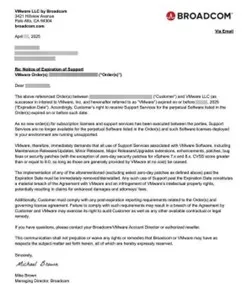
Broadcom has introduced a subscription-based licensing model, changing how enterprises evaluate VMware adoption and long-term virtualization costs.
The company sent “cease and desist” letters to VMware perpetual license holders with expired support contracts, warning that continuing to install updates or patches without signing a new contract constitutes infringement.
According to CRN, Toshiba, a 16-year VMware customer, began evaluating alternative platforms after experiencing significant increases in VMware-related costs.
The company is now migrating 2,200 virtual machines from the VMware-Broadcom platform to other platforms.
Gartner’s Global Server Virtualization Market Guide highlights that the server virtualization market is experiencing one of its most significant periods of disruption in more than a decade.
Gartner predicts that by 2028, cost concerns will drive 70% of enterprise VMware customers to migrate 50% of their virtual workloads.
Technical Ecosystem Compatibility: Key Elements for Achieving Smooth VMware Transition
For enterprises seeking business continuity and cost optimization, ZSvirt provides a VMware-consistent virtualization experience while offering greater flexibility and improved total cost efficiency.
Hardware Compatibility
Chip Level
Compatible with Intel and AMD processors.
-
Intel processors: Full-generation support including Xeon Scalable (Skylake/Cascade Lake/Ice Lake/Sapphire Rapids), Xeon E3/E5/E7 (v3-v6), and Core i3/i5/i7/i9 (8th gen+).
-
AMD processors: EPYC 7002/7003/9004 Series (Zen2/Zen3/Zen4), Ryzen PRO Series, with exclusive optimization for AMD Infinity Guard security technology integration.
Infrastructure Level
Adapts to servers, storage, and network equipment from mainstream vendors:
| Manufacturer | Models | Type |
|---|---|---|
| HP | DL360p Gen8, DL380 G7, CL2200 Gen10 | Rack-mounted |
| DELL | C6220 II, R510, R940 | Rack-mounted |
| Lenovo | System x3650 M5, ThinkSystem SR530, SR860 | Rack-mounted |
| Supermicro | SYS-2028TR-H72R, SYS-2028TR-HTR | Rack-mounted |
Storage optimization
NetApp AFF/FAS Series (ONTAP 9.7+), H3C UniStor X10000, full support for NVMe over Fabric.
Network interconnection
Cisco Nexus 9000 Series (VXLAN hardware offloading), Huawei CE6800/CE8800 (EVPN optimization), white-box switches (ONIE-based deployment).
Software Compatibility
VM Operating Systems
| Manufacturer | OS | Arch | Bit |
|---|---|---|---|
| Red Hat | CentOS 6.x/7.x, Enterprise Linux 6.x | ARM, X86 | 32, 64 |
| Oracle | Oracle Linux 6.x/7.x/8.x | x86 | 64 |
| Novell | SLES 10/11/12 | x86 | 32, 64 |
| Microsoft | Windows 2008 EBS, 2008 SBS, 2016 | x86 | 32, 64 |
Big Data & AI
Hadoop, Spark, Kubernetes, TensorFlow, PyTorch.
Security & Management
Security and management capabilities include VERITAS backup integration, Nginx load balancing, Level 3 cybersecurity certification, east-west firewall protection, and sensitive data detection.
OS Layer
CentOS, Red Hat, Ubuntu, Rocky Linux, OpenEuler, OpenAnolis.
Open Design
ZSvirt adopts an open architecture design that enables flexible integration with existing enterprise management systems and development environments.
RESTful API
ZSvirt provides more than 300 standardized RESTful APIs with Swagger 3.0 documentation, supporting automation scenarios such as synchronization with ServiceNow CMDB.
SDK Extension
The platform provides SDK extensions, including Java SDK (Spring Boot Starter) and Python SDK with Jupyter Notebook examples. In one deployment scenario, automated expansion script development time was reduced by 70%.
API Inspector
The API Inspector enables real-time traffic analysis with OpenTelemetry support and provides intelligent parameter recommendations to improve development and troubleshooting efficiency.
Success Practice Case: Analysis of Typical Scenarios for VMware Migration
Migration Success Case: Real-World VMware Replacement Scenario
A UK-based operator headquartered in London, providing ICT services to global enterprises, successfully completed a VMware-to-ZSvirt migration.
- User status
The organization’s virtualized services were primarily running on VMware infrastructure.
Pain points
The organization faced challenges including aging virtualization hardware, difficulties in replacing legacy servers, increasing operational costs, and reduced service delivery efficiency.
Solution
Instead of continuing with VMware infrastructure upgrades, the enterprise adopted ZSvirt to establish a new cloud platform.
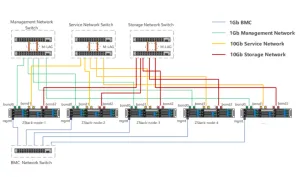
Through V2V migration capabilities, nearly 100 virtual machines, including order management systems, customer service platforms, and websites, were migrated to the new environment.
Conclusion
ZSvirt provides a robust virtualization platform with broad ecosystem compatibility, enabling enterprises to migrate workloads from VMware while maintaining stable operations with minimal disruption.
With extensive hardware and software ecosystem compatibility, open APIs and SDK capabilities, and proven migration tools, ZSvirt enables enterprises to transition smoothly from VMware to a modern, scalable, and cost-optimized virtualization platform.